Thursday, May 24th, 2018
While its name may suggest it is a vestige of Virginia’s legal history, a motion craving oyer remains a powerful, but limited tool in Virginia practice.
When a plaintiff sues based on a written contract or other document but fails to attach it to his complaint, a defendant should consider “craving oyer” of the document. “[A] motion to crave oyer is a request of the Court to require that a document sued upon, or a collateral document which is necessary to the Plaintiff’s claim, be treated as though it were part of the Plaintiff’s pleadings.” Ragone v. Waldvogel, Poe and Cronk Real Estate Group, Inc., 54 Va. Cir. 581, 582 (Roanoke City 2001). “[A] defendant can crave oyer of all documents that form the basis of the Plaintiff’s claim.” Sjolinder v. Am. Enterprises Solutions, Inc., 51 Va. Cir. 436, 437 (Charlottesville 2000); Station # 2, LLC v. Lynch, 75 Va. Cir. 179, 190 (Norfolk 2008); Backwell v., City of Norfolk, 59 Va. Cir. 205, 207-08 (Norfolk 2002).
A motion craving oyer is useful when, for example, a provision in a contract is dispositive and the plaintiff’s allegations in his complaint are inconsistent with that provision. The provision might relate to payment terms or the contract’s terminability at-will with written notice, for example. If the Court sustains the motion craving oyer, the written document will be considered as part of the plaintiff’s complaint. This can be useful if the motion craving oyer is filed in connection with a demurrer (Virginia’s equivalent of a motion to dismiss) seeking to dismiss all or part of the plaintiff’s claims.
An exhibit to a plaintiff’s complaint (or one for which a motion craving oyer has been granted) that contradicts the complaint’s allegations may be considered on demurrer. Wards Equipment, Inc. v. New Holland North America, Inc., 254 Va. 379, 382 (1997) (“when a demurrant’s motion craving oyer has been granted, the court in ruling on the demurrer may properly consider the facts alleged as amplified by any written agreement added to the record on the motion.”). Not only may a court consider the written document in connection with a demurrer, the court “may ignore a party’s factual allegations contradicted by the terms of authentic, unambiguous documents that properly are a part of the pleadings.” Wards Equipment, 254 Va. at 382-83 (citing Fun v. Virginia Military Inst., 245 Va. 249, 253 (1993)). The ability to have a document considered as part of the plaintiff’s complaint in connection with a demurrer is particularly important in Virginia where summary judgment is much more limited than in Federal practice. Among other limitations, deposition testimony is not allowed to be considered in support of a motion for summary judgment. See Rule 3:20 of the Rules of the Virginia Supreme Court.
The use of motions craving oyer is not unlimited, however. In a recent case, the Honorable Michael T. Garrett of the Circuit Court of Amherst County denied a motion craving oyer filed in connection with defendant’s demurrer. Johnson Senior Center, Inc. v. Dolan, 97 Va. Cir. 76 (Amherst County 2017).
In Dolan, the plaintiff asserted two claims in its complaint: breach of fiduciary duty and conversion. The plaintiff contended that the defendants spent corporate funds to pay for personal expenses unrelated to the corporation’s business purposes. The complaint further alleged that the director of the company had attempted to obtain access to certain corporate records in the possession of the defendant. The defendants filed a motion craving oyer seeking to require the corporate plaintiff to produce the corporate documents the director had requested in order to have them considered in support of their demurrer.
The court overruled the motion craving oyer. It held that motions craving oyer are limited to cases in which the cause of action depends on a particular document. The Court reasoned, “Motions craving oyer are not appropriate for documents that are merely evidentiary material,” and that “oyer is not a tool to be used for random discovery.” 97 Va. Cir. at 77. Finally, the court instructed that a motion craving oyer will be denied when the documents requested “are not so essential to the pleading that the court cannot make an intelligent construction of the pleading without the documents appended and used for contextual reference.” Id. at 78. Where the documents sought are merely “of an evidentiary nature” and, though important, are not absolutely essential to construing the complaint, oyer will not be granted. Rather, such documents are properly to be disclosed during the discovery process rather than in the pleading phase of the case. Id.
The practice pointer from these cases is that if a document is sued on by the plaintiff or is an essential part of his claim or is necessary to interpret his complaint, a motion craving oyer likely will be sustained. If, however, the document is merely evidence that supports a claim or defense, courts will likely not grant oyer as to it. It may be important evidence in the case and may be considered by the factfinder at trial, but it will not be considered by the court at the outset of the case when the court deals with any demurrer. When a defendant considers its responsive pleadings to a complaint, it will be important to analyze this distinction in weighing the merits of filing a motion craving oyer and a demurrer.
Thursday, May 17th, 2018
Using Sworn Testimony in Support of a Motion for Summary Judgement in Virginia Circuit Courts
One of the biggest distinctions between federal practice and Virginia practice is that, in Virginia practice, summary judgment cannot be based upon deposition testimony. However, that doesn’t necessarily mean that all previously given sworn testimony is off-limits.
Rule 3:20 of the Rules of the Supreme Court of Virginia states, in part:
No motion for summary judgment or to strike the evidence shall be sustained when based in whole or in part upon any discovery depositions under Rule 4:5, unless all parties to the action shall agree that such deposition may be so used, or unless the motion is brought in accordance with the provisions of subsection B of § 8.01-420.
Virginia Code § 8.02-420 contains the same general rule against deposition use in support of summary judgment, but carves out two exceptions. First, requests for admission (which can be used to support a motion for summary judgment) may be based upon and include facts discussed during a deposition provided that the requests do not reference the deposition. Second, motions for partial summary judgment seeking the dismissal of punitive damages claims may be supported by deposition testimony provided that the basis for the punitive damages claim is not the operation of a motor vehicle while under the influence of an intoxicant.
These procedural rules are silent, however, on the use of prior courtroom testimony as the basis for summary judgment.
In Benjamin v. University Internal Medicine Foundation, 254 Va. 400, 492 S.E.2d 651 (1997), a medical malpractice case, the trial court sustained the defendant physician’s plea of sovereign immunity. Relying on evidence given at the sovereign immunity hearing, the trial court then granted the defendant foundation’s motion for summary judgment. On appeal, the Supreme Court of Virginia affirmed, explaining:
At the hearing on the motion for summary judgment, the trial court read portions of Girtman’s ore tenus testimony from the evidentiary hearing on the sovereign immunity plea concerning the lack of UIMF’s involvement, financially or otherwise, in the “operations, upkeep or fundings of the ECC.” The trial court specifically asked Benjamin’s counsel if he had any evidence to “counter” Girtman’s testimony. Benjamin’s counsel did not identify any such evidence, but argued only that he was not prepared to put on evidence that day. The trial court subsequently entered the order sustaining UIMF’s motion for summary judgment.
Under these circumstances, we conclude that the trial court did not err in entering summary judgment in favor of UIMF.
Benjamin, 254 Va. at 406, 492 S.E.2d at 654.
Consistent with Court’s decision in Benjamin, circuit courts have relied upon testimony given at evidentiary hearings to support the grant of summary judgment. In Cave v. Mitchell, 40 Va. Cir. 427 (Rockingham Co. 1996), Judge McGrath considered exhibits and testimony given at a preliminary injunction hearing in support of a summary judgment motion. In Eadie v. Commercial Steel Erection, Inc., CL16001439 (Campbell County 2018), a case Gentry Locke recently successfully handled, Judge Cook relied on testimony given at a plea in bar hearing in granting summary judgment. Additionally, in Aswad v. Norfolk S. Ry. Co., No. 04-2536, 2006 Va. Cir. Lexis 43 (City of Portsmouth 2006), Judge Davis quoted the following from Kent Sinclair & Leigh B. Middleditch, Jr., Virginia Civil Procedure, § 9.8 (4th ed. 2003):
One of the unique features of Virginia practice is that evidence may be taken on a party’s dispositive pleas. This practice, which is optional, provides a hybrid that makes a special plea quite different from the demurrer (where the face of the pleading controls) or summary judgment (where facts are only established in Virginia by “admissions” and perhaps the pleadings). In one sense, the option to have evidence on a special plea is an avenue for factual submissions where summary judgment on the point would be barred by the Virginia doctrine that depositions and affidavits may not be used to support summary adjudication.
In a 2012 Virginia Supreme Court case, Campbell County v. Royal, 283 Va. 4, 720 S.E.2d 90 n.13, the Court, in a footnote, explained that the trial court relied upon testimony and exhibits presented during a plea in bar hearing in ruling on summary judgment. Without further comment, the Court stated, “[t]he [trial] court’s use of those materials is not challenged on appeal.” This is, perhaps, an indication that the Court is willing to reconsider its holding in Benjamin.
However, until a subsequent opinion on the topic is issued by the Supreme Court of Virginia, testimony given at a pre-trial evidentiary hearing is “fair game” for summary judgment motions.
Thursday, May 10th, 2018
Gentry Locke employment law partner Todd Leeson recently published an important article for business executives. The article was inspired by contrasting images of women in an upscale steakhouse. Todd implores executives to take action to ensure a culture of respect in the workplace. Read the formatted PDF of the article
Reprinted with permission from the April 27, 2018 edition of CorporateCounsel© 2018 ALM Media Properties, LLC. All rights reserved.
Picture an upscale steakhouse in a bustling downtown of a mid-size southern city—a swanky joint where every night hundreds of patrons happily pay $50+ for a delicious steak, and $15 for a cocktail. This is “THE Place” to be. It is frequented by business owners, executives, entrepreneurs, and those who love the good life (and can afford it). With glowing recommendations from TripAdvisor and from lawyers I know in that city, my wife and I recently dined there during an out of town trip.
When I went to the men’s room, I observed a series of color photos of scantily clad women, drinking alcohol, in seductive poses—below is one such photo. When I described this to my wife, she reported that the women’s room was filled with classic photos of Audrey Hepburn—including the one below. Does this stark (and deliberate) contrast provide any lessons for business executives in the era of #MeToo?

Comparison of disparate restroom images displayed in an upscale restaurant.
I recently described the steakhouse to a cross section of women, but only showed the Audrey Hepburn photo that I told them adorned the women’s room. When I sought their impressions, the overwhelming consensus was that this restaurant must be classy, elegant and glamourous. (If they only knew what their male counterparts saw!) Conversely, when I set the scene for a representative sample of men and only showed them the photo in the men’s room, the men viewed the women in a much different light, essentially as sexual objects. Several men opined that it appeared the restaurant was seeking to promote sexual liaisons.
I am a management employment lawyer. For almost three decades I have defended Virginia companies in court in discrimination and harassment lawsuits. I also regularly advise corporate clients in an effort to keep them out of court. This includes education and training of executives and managers (and employees) regarding EEO and harassment issues and prevention.
In 2015, the Equal Employment Opportunity Commission (EEOC) concluded that harassment continued to be a significant problem in the workplace, and formed a “Select Task Force” to examine the problem and search for solutions. (I wrote about the Select Task Force’s June 2016 Report in an article posted on my law firm’s website in January 2017.)
As we know, in the fall of 2017, the Harvey Weinstein scandal exploded, and the #MeToo crusade began.
Businesses today are struggling to understand the impact the #MeToo movement will have on sexual harassment, and other improper conduct, that occurs in the workplace. Jodi Kantor, a New York Times reporter who has written extensively on Harvey Weinstein and the sexual abuse of women (which reporting recently helped The New York Times earn a Pulitzer Prize), framed the question this way:
Women have spoken. Men have fallen. Corporations are nervous. But are American workplaces making real progress in curbing sexual harassment?
“#MeToo Called for an Overhaul. Are Workplaces Really Changing?” by Jodi Kantor, published in The New York Times (Mar. 27, 2018).
Candidly, I have my doubts. This brings us back to the steakhouse. We know that men overwhelmingly serve as the CEOs of private sector companies. Simply put, the men who frequent this steakhouse are the same persons who run companies, and often set the culture for their organizations. Regrettably, the continued objectification of women, overtly or subtly, especially by men in power, will make REAL change in the workplace unlikely.
Let me illustrate this point by discussing a recent case involving a Lexus dealership in Massachusetts. After years of good work, Emma was promoted to finance manager. In her role, she reported to Emmanuel, a long-term manager. The dealership had a sexual harassment policy in place and purportedly trained managers and employees on the policy. Unfortunately, for over a year, Emmanuel frequently subjected Emma to unwelcome conduct of a sexual nature. Among other things, he asked her if they could sleep together so he could see her breasts, he would attempt to throw coins down her blouse, and he regularly commented on her anatomy in graphic terms. Emma (and others) complained to senior management about Emmanuel’s conduct, but nothing was done. One day Vince, the general manager, abruptly terminated Emma for allegedly having poor relationships with other co-workers. During the termination meeting, Emma told Vince that Emmanuel had been sexually harassing her.
In the litigation that followed, Vince admitted that he “honestly did not believe [Emma].” As a result, Vince oversaw a sham investigation in which he failed to interview anyone in the finance department because he did not want to undermine Emmanuel. Emma ultimately prevailed at trial, and received a substantial monetary award, including punitive damages.
The night I dined at the steakhouse, I observed dozens of young women and men working as hostesses, servers, and bartenders. I wonder about the culture in the steakhouse and its commitment to curbing sexual harassment. If a female hostess was subjected to unwelcome conduct by a male manager (or co-worker or customer), would she truly believe that she could complain to management or human resources, if she were not able to resolve the concern herself? (The EEOC counsels that the best first step, if possible, is to tell the offending person to stop the inappropriate conduct.) Moreover, if a male executive at the steakhouse learned about a complaint, especially from a newer employee, would he be predisposed to believe her complaint was unfounded, invited, and/or embellished?
In January, the Society for Human Resource Management (SHRM) reported findings from its year-long research initiative to help businesses address the issue of workplace harassment. Among its findings, SHRM reported that 76% of non-management employees who experienced sexual harassment in the workplace never report it. This is an alarming fact. It is also consistent with the data that the EEOC Select Task Force previously uncovered. The primary reasons employees do not complain are fear of loss of job (i.e., retaliation), and/or a belief that the company will not take action (i.e., futility).
I have had corporate executives and HR professionals tell me that they are not concerned with the current landscape because they have solid policies, a good HR team, and have not had any valid complaints in years (or ever). Does this sound familiar? If this describes your company, does this mean that all is well with your workforce? If your former or current employees were surveyed anonymously, would any of them reveal that they experienced improper conduct of a sexual nature but did not complain?
My message to business owners in the private sector is simple: Do not fall into a false sense of security.
Companies must evolve from a “check the box” mentality when it comes to preventing and addressing workplace misconduct, especially sexual harassment. Yes, companies need to have updated policies and complaint processes in place. To this end, the EEOC recommends (as do I) that such policies not focus solely or primarily on legal definitions of “harassment.” The policy should make clear, among other things, that it violates company policy any time there is offensive or inappropriate conduct based on a person’s protected class.
More importantly, however, business leaders need to devote significant time and resources to ensure an internal culture that emboldens employees to come forward if they experience, observe, or learn about improper conduct. Human Resources needs to earn the trust of employees. Companies must impose proportional corrective action against persons found to have violated company policy.
Over the last few months, I have met with company executives, updated policies and educated managers and employees on the new landscape. The good news is that some executives get it! I still see male executives, however, who are naive or oblivious. As a classic example, what message does the company send when it schedules mandatory harassment/EEO education for its management team, and the CEO does not attend because of an “unexpected” conflict? (Perhaps he has scheduled a business meeting at the steakhouse.)
I am a strong advocate for management in workplace matters. My recent experiences persuade me, however, that executives must do more. Will you answer the call?
Wednesday, February 28th, 2018
Bill Gust is a Senior Tax Partner with Gentry Locke. For more than 30 years, Bill has worked with closely held business owners relative to tax, employee benefits, corporate, and sophisticated estate planning matters. With his expertise in implementing business succession strategies, Bill has assisted in the successful transition of many privately held businesses, through sales, mergers and implementation of numerous ESOPs.
The Tax Cuts and Jobs Act (the “Act”) will bring significant changes to many areas of the tax law affecting individuals and businesses beginning January 2018 through 2025. In 2026, the pre-Act rules are scheduled to come back into effect.
This article is a very general overview of just some of the changes that may be of interest, with individual taxation changes presented first, followed by corporate taxation changes. Please note that as the IRS continues its work on the implementation of the Act, we anticipate that additional technical corrections and updated regulations will follow.
Individual Taxation Changes
Rate changes for individuals. Individuals are subject to income tax on “ordinary income,” such as compensation, and most retirement and interest income, at increasing rates that apply to different ranges of income depending on their filing status (single; married filing jointly, including surviving spouse; married filing separately; and head of household). In 2017, those rates were 10%, 15%, 25%, 28%, 33%, 35%, and 39.6%.
Beginning with the 2018 tax year and continuing through 2025, there will still be seven tax brackets for individuals, but their percentage rates will change to: 10%, 12%, 22%, 24%, 32%, 35%, and 37%.
Impact of Changes. While these changes will lower rates at many income levels, determining the overall impact on any particular individual or family will depend on a variety of other changes made by the Act, including increases in the standard deduction, loss of personal and dependency exemptions, a dollar limit on itemized deductions for state and local taxes, and changes to the child tax credit and the taxation of a child’s unearned income, known as the “Kiddie Tax.”
Capital gain rates. The Act did not significantly change capital gain rate structure. Three tax brackets apply to net capital gains, including certain kinds of dividends, of individuals and other noncorporate taxpayers: 0% for net capital gain that would be taxed at the 10% or 15% rate if it were ordinary income; 15% for gain that would be taxed above 15% and below 39.6% if it were ordinary income, or 20% for gain that would be taxed at the 39.6% ordinary income rate.
The Act generally keeps the existing rates and breakpoints on net capital gains and qualified dividends. For 2018, the 15% breakpoint is: $77,200 for joint returns and surviving spouses (half this amount for married taxpayers filing separately), $51,700 for heads of household, and $38,600 for other unmarried individuals. The 20% breakpoint is $479,000 for joint returns and surviving spouses (half this amount for married taxpayers filing separately), $452,400 for heads of household, and $425,800 for any other individual (other than an estate or trust).
**It is important to note that these new individual income tax rates will not affect your tax on the return you will soon file for 2017. However they will almost immediately affect the amount of your wage withholding and the amount, if any, of estimated tax that you may need to pay for 2018.**
A related change is that the future annual indexing of the rate brackets (and many other tax amounts) for inflation, which helps to prevent “bracket creep” and the erosion of the value of a variety of deductions and credits due solely to inflation, will be done in a way that generally will recognize less inflation than the current method does. While it won’t be very recognizable immediately, over the years this will push some additional income into higher brackets and reduce the value of many tax breaks.
Standard deduction. The Act increases the standard deduction to $24,000 for joint filers, $18,000 for heads of household, and $12,000 for single and married taxpayers filing separately. Given these increases, many taxpayers will no longer have a need to itemize deductions. These figures will be indexed for inflation after 2018.
Child and family tax credit. The Act increases the credit for qualifying children (i.e., children under 17) to $2,000 from $1,000, and increases to $1,400 the refundable portion of the credit. It also introduces a new (nonrefundable) $500 credit for a taxpayer’s dependents who are not qualifying children. The adjusted gross income level at which the credits begin to be phased out has been increased to $200,000 ($400,000 for joint filers).
Miscellaneous itemized deductions. There is no longer a deduction for miscellaneous itemized deductions which were formerly deductible to the extent they exceeded 2 percent of adjusted gross income. This category included items such as tax preparation costs, investment expenses, union dues, and unreimbursed employee expenses.
Medical expenses. Under the Act, for 2017 and thereafter, medical expenses are deductible to the extent they exceed 7.5 percent of adjusted gross income for all taxpayers. Previously, the AGI “floor” was 10% for most taxpayers.
Casualty and theft losses. The itemized deduction for casualty and theft losses has been suspended except for losses incurred in a federally declared disaster.
Overall limitation on itemized deductions. The Act suspends the overall limitation on itemized deductions that formerly applied to taxpayers whose adjusted gross income exceeded specified thresholds. The itemized deductions of such taxpayers were reduced by 3% of the amount by which adjusted gross income exceeded the applicable threshold, but the reduction could not exceed 80% of the total itemized deductions, and certain items were exempt from the limitation.
Moving expenses. The deduction for job-related moving expenses has been eliminated, except for certain military personnel. The exclusion for moving expense reimbursements has also been suspended.
New State and Local Tax Limitations. For tax years 2018 through 2025, the Act limits deductions for taxes paid by individual taxpayers in the following ways:
. . . Limits the aggregate deduction for state and local real property taxes; state and local personal property taxes; state and local, and foreign, income, war profits, and excess profits taxes; and general sales taxes (if elected) for any tax year to $10,000 ($5,000 for marrieds filing separately). However this limit doesn’t apply to: (i) foreign income, war profits, excess profits taxes; (ii) state and local, and foreign, real property taxes; and (iii) state and local personal property taxes if those taxes are paid or accrued in carrying on a trade or business or in an activity engaged in for the production of income.
. . . Completely eliminates the deduction for foreign real property taxes unless they are paid or accrued in carrying on a trade or business or in an activity engaged in for profit.
To prevent avoidance of the $10,000 deduction limit by prepayment in 2017 of future taxes, the Act treats any amount paid in 2017 for a state or local income tax imposed for a tax year beginning in 2018 as paid on the last day of the 2018 tax year. So an individual may not claim an itemized deduction in 2017 on a pre-payment of income tax for a future tax year in order to avoid the $10,000 aggregate limitation. The IRS has also issued guidance indicating that the prepayment of real estate, personal property and other local taxes in 2017 for 2018 unassessed taxes are not deductible in 2017.
Health care “individual mandate.” Starting in 2019, there is no longer a penalty for individuals who fail to obtain minimum essential health coverage.
Exemptions. The Act suspends the deduction for personal exemptions. Thus, starting in 2018, taxpayers can no longer claim personal or dependency exemptions. The rules for withholding income tax on wages will be adjusted to reflect this change, but IRS was given the discretion to leave the withholding unchanged for 2018.
Estate and gift tax exemption. For decedents dying, and gifts made, in 2018, the estate and gift tax exemption has been increased to roughly $11.2 million ($22.4 million for married couples).
Alternative minimum tax (AMT) exemption. The AMT has been retained for individuals but the exemption has been increased to $109,400 for joint filers ($54,700 for married taxpayers filing separately), and $70,300 for unmarried taxpayers. The exemption is phased out for taxpayers with alternative minimum taxable income over $1 million for joint filers, and over $500,000 for all others.
Deduction for Qualified Residential Interest (i.e., interest on your home mortgage). Under the pre-Act rules, you could deduct interest on up to a total of $1 million of mortgage debt used to acquire your principal residence and a second home, (i.e., acquisition debt). For a married taxpayer filing separately, the limit was $500,000. You could also deduct interest on home equity debt, (i.e., other debt secured by the qualifying homes). Qualifying home equity debt was limited to the lesser of $100,000 ($50,000 for a married taxpayer filing separately), or the taxpayer’s equity in the home or homes (the excess of the value of the home over the acquisition debt). The funds obtained via a home equity loan did not have to be used to acquire or improve the homes. So you could use home equity debt to pay for education, travel, health care, etc.
Under the Act, starting in 2018, the limit on qualifying acquisition debt is reduced to $750,000 ($375,000 for a married taxpayer filing separately). However, for acquisition debt incurred before Dec. 15, 2017, the higher pre-Act limit applies. The higher pre-Act limit also applies to debt arising from refinancing pre-Dec. 15, 2017 acquisition debt, to the extent the debt resulting from the refinancing does not exceed the original debt amount. This means you can refinance up to $1 million of pre-Dec. 15, 2017 acquisition debt in the future and not be subject to the reduced limitation.
In addition to the home mortgage interest limit, starting in 2018, there is no longer a deduction for interest on home equity debt. This applies regardless of when the home equity debt was incurred. Accordingly, if you are considering incurring home equity debt in the future, you should take this factor into consideration. And if you currently have outstanding home equity debt, be prepared to lose the interest deduction for it, starting in 2018. (You will still be able to deduct it on your 2017 tax return, filed in 2018.)
Beginning in 2026, interest on home equity loans will be deductible again, and the limit on qualifying acquisition debt will be raised back to $1 million ($500,000 for married separate filers).
Tax Impact for Divorce and Alimony Payments. Under divorce agreements and legal separation agreements executed after 2018:
Under the current rules, an individual who pays alimony or separate maintenance may deduct an amount equal to the alimony or separate maintenance payments paid during the year as an “above-the-line” deduction. (i.e., a deduction that a taxpayer need not itemize deductions to claim which is more valuable for the taxpayer than an itemized deduction.) And, under current rules, alimony and separate maintenance payments are taxable to the recipient spouse (includible in that spouse’s gross income).
Under the Act, alimony payments made under divorce agreements and legal separation agreements executed after 2018 no longer qualify for a deduction for alimony for the payer. Furthermore, alimony is not gross income to the recipient. So for divorces and legal separations that are executed (i.e., that come into legal existence due to a court order) after 2018, the alimony-paying spouse won’t be able to deduct the payments, and the alimony-receiving spouse doesn’t include them in gross income or pay federal income tax on them.
The new rules don’t apply to existing divorces and separations. It’s important to emphasize that the current rules continue to apply to already-existing divorces and separations, as well as divorces and separations that are executed before 2019.
Some taxpayers may want the Act rules to apply to their existing divorce or separation. Under a special rule, if taxpayers have an existing (pre-2019) divorce or separation decree, and they have that agreement legally modified, then the new rules don’t apply to that modified decree, unless the modification expressly provides that the Act rules are to apply. There may be situations where applying the Act rules voluntarily is beneficial for the taxpayers, such as a change in the income levels of the alimony payer or the alimony recipient.
Recharacterization of IRA contributions. An individual who makes a contribution to a regular or Roth IRA can recharacterize it as made to the other type of IRA via a trustee-to-trustee transfer before the due date of the return for the contribution year. Under the new law, however, once a contribution to a regular IRA has been converted into a contribution to a Roth IRA, it can no longer be converted back into a contribution to a regular IRA, i.e., a recharacterization cannot be used to “unwind” a Roth conversion. For any conversions made by taxpayers to a Roth IRA during 2017, taxpayers have until Oct. 15, 2018 to unwind the 2017 recharacterization (provided they meet the requirements for an automatic extension of the election period).
Extended rollover period for plan loan offset amounts. If an employee’s loan from his qualified retirement plan, Code Sec. 403(b) plan, or Code Sec. 457(b) plan is treated as distributed from the plan due to the plan’s termination or the employee’s failure to meet the repayment terms due to his separation from service, the employee may roll over the deemed distribution to an eligible retirement plan. The new law allows the rollover to be made any time up to the due date (including extensions) of the employee’s tax return for the year of the deemed distribution. Pre-Act law allowed the employee only 60 days from the date of the distribution.
Length of service awards to public safety volunteers. Under pre-Act law, a plan that only provides length of service awards to bona fide volunteers or their beneficiaries for qualified services performed, is not treated as a deferred compensation plan for Code Sec. 457 purposes. Qualified services are firefighting and prevention services, emergency medical services, and ambulance services, including services performed by dispatchers, mechanics, ambulance drivers, and certified instructors. The new law increases the limit on the aggregate amount of length of service awards that can accrue in a year of service for a bona fide volunteer from $3,000 to $6,000, to be adjusted annually for inflation. For a defined benefit plan, the limit applies to the actuarial present value of the aggregate amount of awards accruing for any year of service.
Qualified disaster distributions taxable over three-year period. Under the new law, a “qualified 2016 disaster distribution” will be included in a taxpayer’s gross income ratably over a three-year period starting with the year it is received, unless the taxpayer elects to have the distribution fully taxed in the year it is received. A “qualified 2016 disaster distribution” is a distribution received from an “eligible retirement plan” in 2016 or 2017 by an individual whose place of abode was in a Presidentially declared disaster area at any time during 2016, and who sustained an economic loss from the disaster. An eligible plan is an IRA, individual retirement annuity, qualified plan, Code Sec. 403(a) qualified annuity plan, Code Sec. 403(d) plan, governmental Code Sec. 457(b) plan, or Code Sec. 403(b) annuity contract. There is a $100,000 aggregate limit on qualifying distributions for these purposes.
Qualified 2016 disaster distributions not subject to 10% early withdrawal penalty. In general, unless an exception applies, withdrawals from qualified plans and IRAs before age 59 and a half are subject to a 10% penalty in addition to regular taxation. Under the new law, a “qualified 2016 disaster distribution,” defined above, will not be subject to the 10% penalty on early withdrawals from qualified plans and IRAs.
Three-year period to recontribute qualified 2016 disaster distributions. In general, eligible distributions from qualified plans and IRAs can be rolled over into eligible plans within 60 days to avoid being taxed. Under the law new, qualified 2016 disaster distributions, defined above, can be recontributed to a qualified plan or IRA in which the taxpayer is a beneficiary up to three years beginning the day after the date of distribution and avoid taxation. A recontribution is treated as a direct trustee-to-trustee rollover.
Period to amend qualified plans and IRAs for new law changes extended. Under the new law, a qualified plan or IRA can be amended for new law changes retroactively any time up to the last day of the first plan year beginning after 2017 without losing its qualified status for actions taken in compliance with the law changes. Thus, e.g., a qualified plan can make a qualified 2016 disaster distribution in 2017 without first amending the plan to allow such a distribution, as long as the amendment is made retroactively before the end of the extension period. For governmental plans, the amendment may be made up to the last day of the first plan year beginning after 2019.
Corporate Taxation Changes
Corporate income tax rate drop. “C” or regular corporations currently are subject to graduated tax rates of 15% for taxable income up to $50,000, 25% (over $50,000 to $75,000), 34% (over $75,000 to $10,000,000), and 35% (over $10,000,000). Personal service corporations pay tax on their entire taxable income at the rate of 35%. (The benefit of lower rate brackets was phased out at higher income levels.)
Beginning with the 2018 tax year, the Act makes the corporate tax rate a flat 21%. It also eliminates the corporate alternative minimum tax.
Tax Reduction for Pass-Through Entities. The Act provides for a new deduction that should provide a substantial tax benefit to individuals with “qualified business income” from a partnership, S corporation, LLC, or sole proprietorship. This income is sometimes referred to as “pass-through” income.
The deduction is 20% of your “qualified business income” or QBI from a partnership, S corporation, or sole proprietorship, defined as the net amount of items of income, gain, deduction, and loss with respect to your trade or business. The business must be conducted within the U.S. to qualify, and specified investment-related items are not included, (e.g., capital gains or losses, dividends, and interest income unless the interest is properly allocable to the business). The trade or business of being an employee does not qualify. Also, QBI does not include reasonable compensation received from an S corporation, or a guaranteed payment received from a partnership for services provided to a partnership’s business.
The deduction is taken “below the line,” (i.e., it reduces your taxable income but not your adjusted gross income). But it is available regardless of whether you itemize deductions or take the standard deduction. In general, the deduction cannot exceed 20% of the excess of your taxable income over net capital gain. If QBI is less than zero it is treated as a loss from a qualified business in the following year.
The Act includes provisions (discussed below) to deter high-income taxpayers from attempting to convert wages or other compensation for personal services into QBI eligible for the deduction. For taxpayers with taxable income above $157,500 ($315,000 for joint filers), an exclusion from QBI of income from “specified service” trades or businesses is phased in. These are trades or businesses involving the performance of services in the fields of health, law, consulting, athletics, financial or brokerage services, or where the principal asset is the reputation or skill of one or more employees or owners. Here’s how the phase-in works: If your taxable income is at least $50,000 above the threshold, (i.e., $207,500 ($157,500 + $50,000), all of the net income from the specified service trade or business is excluded from QBI. (Joint filers would use an amount $100,000 above the $315,000 threshold, (i.e.,$415,000). If your taxable income is between $157,500 and $207,500, you would exclude only that percentage of income derived from a fraction the numerator of which is the excess of taxable income over $157,500 and the denominator of which is $50,000. So, for example, if taxable income is $167,500 ($10,000 above $157,500), only 20% of the specified service income would be excluded from QBI ($10,000/$50,000). (For joint filers, the same calculation would apply using the $315,000 threshold, and a $100,000 phase-out range.)
Additionally, for taxpayers with taxable income more than the above thresholds, a limitation on the amount of the deduction is phased in based either on wages paid or wages paid plus a capital element. Here’s how it works: If your taxable income is at least $50,000 above the threshold, or $207,500 ($157,500 + $50,000), your deduction for QBI cannot exceed the greater of (1) 50% of your allocable share of the W-2 wages paid with respect to the qualified trade or business, or (2) the sum of 25% of such wages plus 2.5% of the unadjusted basis immediately after acquisition of tangible depreciable property used in the business (including real estate). So if your QBI were $100,000, leading to a deduction of $20,000 (20% of $100,000), but the greater of (1) or (2) above were only $16,000, your deduction would be limited to $16,000, i.e., it would be reduced by $4,000. If your taxable income were between $157,500 and $207,500, you would only incur a percentage of the $4,000 reduction, with the percentage worked out via the fraction discussed in the preceding paragraph. (For joint filers, similar calculations would apply using the $315,000 threshold, and a $100,000 phase-out range.)
Other limitations may apply in certain circumstances, e.g., for taxpayers with qualified cooperative dividends, qualified real estate investment trust (REIT) dividends, or income from publicly traded partnerships.
As you can see from above, the ability to qualify for the new deduction for Pass Through Entities requires a series of rather complicated calculations and the impact will depend upon the facts and circumstances unique to your situation. Fluctuations in income from one year to another may have a positive or negative effect on the application of the deduction.
Bonus depreciation. Before the Act, taxpayers were allowed to deduct in the year that an asset was placed in service 50% of the cost of most new tangible property other than buildings and, with the exception of qualified improvement property, building improvements. Most new computer software was also eligible for the 50% deduction. Because of the deduction in the year placed in service, there was adjustment of the regular depreciation allowed in that year and later years. The “50% bonus depreciation” was to be phased down to 40% for property placed in service in calendar year 2018, 40% in 2019 and 0% in 2020 and afterward. The phase down was to begin a year later for certain private aircraft and long-production period property.
For property placed in service and acquired after Sept. 27, 2017 (with no written binding contract for acquisition in effect on Sept. 27, 2017), the Act has raised the 50% rate to 100%. (Appropriately, 100% bonus depreciation is also called “full expensing” or “100% expensing”.)
Additionally, under the Act the post-Sept. 27, 2017 property eligible for bonus depreciation can be new or used. Also, certain film, television and live theatrical productions are now eligible. On the other hand, the Act excluded from bonus depreciation public utility property and property owned by certain vehicle dealerships.
The 2018/2019/2020 phase down (above) doesn’t apply to post-Sept 27, 2017 property. Instead, 100% depreciation is decreased to 80% for property placed in service in calendar year 2023, 60% in 2024, 40% in 2025, 20% in 2026 and 0% in 2027 and afterward (with phase down beginning a year later for certain private aircraft and long-production period property).
Code Sec. 179 expensing. Before the Act, most smaller taxpayers could elect, on an asset-by-asset basis, to immediately deduct the entire cost of section 179 property up to an annual limit of $500,000 adjusted for inflation. For assets placed in service in tax years that begin in 2018, the scheduled adjusted limit was $520,000. The annual limit was reduced by one dollar for every dollar that the cost of all section 179 property placed in service by the taxpayer during the tax year exceeded a $2 million inflation-adjusted threshold. For assets placed in service in tax years that begin in 2018, the scheduled threshold was $2,070,000.
The Act substitutes as the annual dollar limit $1 million (inflation-adjusted for tax years beginning after 2018) and $2.5 million as the phase down threshold (similarly inflation adjusted).
Before the Act, section 179 property included tangible personal property as well as non-customized computer software. The only buildings or other non-production-process land improvements that qualified did so because the taxpayer elected to treat “qualified real property” as section 179 property, for purposes of both the dollar limit and the phase down threshold. Qualified real property included restaurant buildings and certain improvements to leased space, retail space and restaurant space.
For tax years beginning after 2017, those buildings and improvements are eliminated as types of qualified real property and there is substituted a far broader group of improvements made to any building other than a residential rental building: (1) any building improvement other than elevators, escalators, building enlargements or changes to internal structural framework, and (2) building components that are roofs; heating, ventilation and air conditioning property; fire protection and alarm systems; or security systems.
Also, for tax years beginning after 2017, items (for example, non-affixed appliances) used in connection with residential buildings (but not the buildings or improvements to them) are section 179 property.
Other rules for real property depreciation. If placed in service after 2017, qualified improvement property, in addition to being eligible for bonus depreciation and being newly eligible as section 179 property, has a 15 year depreciation period (rather than the usual 39 year period for non-residential buildings).
Apartment buildings and other residential rental buildings placed in service after 2017 generally continue to be depreciated over a 27.5 period, but should the alternative depreciation system (ADS) apply to a building either under an election or because the building is subject to one of the conditions (for example, tax-exempt financing) that make ADS mandatory, the ADS depreciation period is 30 years instead of the pre-act 40 years.
For tax years beginning after 2017, if a taxpayer in a real property trade or business “elects out” of the Act’s limits on business interest deductions, the taxpayer must depreciate all buildings and qualified improvement property under the ADS.
Vehicles. The Act triples the annual dollar caps on depreciation (and Code Sec. 179 expensing) of passenger automobiles and small vans and trucks. Also, because of the extension of bonus depreciation, the increase, for vehicles allowed bonus depreciation, of $8,000 in the otherwise-applicable first year cap is extended through 2026 (with no phase-down).
Computers and peripheral equipment. Under the Act, computer or peripheral equipment placed in service after 2017 isn’t treated as “listed property” whether or not used in a business establishment (or home office) and whether or not, in the case of an employee, the use is for employer convenience. So an item no longer has to pass a more-than-50%-qualified-business-use test to be eligible for Code Sec. 179 expensing and to avoid mandatory use of the ADS.
Farm property. For items placed in service after 2017, the Act shortens the depreciation period for most farming equipment and machinery from seven years to five and allows many types of farm property to be depreciated under the 200% (instead of 150%) declining balance method.
As you will note, the foregoing tax changes may present an opportunity for substantial savings. If you have any questions about a specific provision that may affect your business or individual tax situation please feel free to contact Bill Gust or other Gentry Locke Tax attorneys.
Thursday, December 14th, 2017
Glenn Pulley, a Partner in our Lynchburg office, was raised in Southampton County in eastern Virginia, where his family gardened, raised chickens, fished, and hunted quail. As a resident of Danville with clients around the region, he appreciates and supports the efforts of area farmers who make his commute such a pleasure.
Agritourism not just a hobby. A reputable survey has revealed that in 2015 visitors to Virginia’s agritourism farm businesses spent an estimated $1.5B throughout the state.
Approximately 17% of the $1.5B total was spent at the agritourism venues; the remaining 83% was spent outside the venues (e.g. hotels, restaurants), but inside the Commonwealth.
In 2006, the Virginia Code first included a section which recognizes that farmers are utilizing their land to raise crops and livestock but also to promote tourism. So, what is this business called agritourism? The Code defines it as:
Any activity carried out on a farm or ranch that allows members of the general public, for recreational, entertainment, or educational purposes, to view or enjoy rural activities, including farming, wineries, ranching, historical, cultural, harvest-your-own activities, or natural activities and attractions. An activity is an agritourism activity whether or not the participant paid to participate in the activity.
As the definition suggests, farmers who are engaged in agritourism are relying on traditional and innovative activities. Music festivals, corn mazes, hay rides, animal husbandry workshops, wineries, breweries, cooking schools, gather your own produce, trail rides, and the list goes on.
But, wait. By opening the gates to members of the public who may never have visited a farm, isn’t there a serious risk of injury or even death that could make this business venture ill-advised? Well, maybe for some, but the referenced legislation goes a long way towards precluding lawsuits and recoveries against the farmer. This is accomplished by the following Code section:
§ 3.2-6401. Liability limited; liability actions prohibited.
A) Except as provided in subsection B, an agritourism professional is not liable for injury to or death of a participant resulting from the inherent risks of agritourism activities, so long as the warning contained in § 3.2-6402 is posted as required and, except as provided in subsection B, no participant or participant’s representative is authorized to maintain an action against or recover from an agritourism professional for injury, loss, damage, or death of the participant resulting exclusively from any of the inherent risks of agritourism activities; provided that in any action for damages against an agritourism professional for agritourism activity, the agritourism professional shall plead the affirmative defense of assumption of the risk of agritourism activity by the participant.
B) Nothing in subsection A shall prevent or limit the liability of an agritourism professional if the agritourism professional does any one or more of the following:
- Commits an act or omission that constitutes negligence or willful or wanton disregard for the safety of the participant, and that act or omission proximately causes injury, damage, or death to the participant;
- Has actual knowledge or reasonably should have known of a dangerous condition on the land or in the facilities or equipment used in the activity, or the dangerous propensity of a particular animal used in such activity and does not make the danger known to the participant, and the danger proximately causes injury, damage, or death to the participant; or
- Intentionally injures the participant.
C) Any limitation on legal liability afforded by this section to an agritourism professional is in addition to any other limitations of legal liability otherwise provided by law.
“Inherent risks of agritourism activity” mean those dangers or conditions that are an integral part of an agritourism activity including certain hazards, including surface and subsurface conditions; natural conditions of land, vegetation, and waters; the behavior of wild or domestic animals; and ordinary dangers of structures or equipment ordinarily used in farming and ranching operations. Inherent risks of agritourism activity also include the potential of a participant to act in a negligent manner that may contribute to injury to the participant or others, including failing to follow instructions given by the agritourism professional or failing to exercise reasonable caution while engaging in the agritourism activity.
Other good news is that there are significant resources available to farmers who add tourism to their business model. These include the Virginia Tourism Corporation, the Virginia Department for Agriculture and Consumer Services, the offices of Planning and Zoning for the locality in which the farm is located, the Rural Development Division of the USDA, and the Virginia Cooperative Extension Service.
While listed last, the first call a farmer might want to make is to Dr. Martha Walker of the Virginia Cooperative Extension. She has worked on the project for agritourism in Virginia for more than a decade. On December 6, 2017, Dr. Walker moderated a workshop on agritourism at the Cloverdale Quarter on Route 58 east of Danville. The information distributed at the workshop was informative and the presenters were very entertaining. The attendees included those from the private and public sector. Local, state and federal. To recognize the importance of agritourism in Virginia, Senator Kaine was represented at the workshop by his regional director, Gwen Mason.
As the only attorney at the workshop, it was readily apparent to me that there are many opportunities for attorneys at Gentry Locke to work with those who venture into the agritourism business. There are legal needs in the field of forming the business, drafting its operating documents, advising on issues involving zoning, land acquisition, easements, the environment, wetlands, liability for injuries and property damage, and the drafting and review of contracts. A team approach is essential with the agribusiness entrepreneur working closing with the accountant, the lender, the attorney, and the insurance agent. The attorney and the insurance agent can be especially helpful in avoiding the risk that comes with having visitors on the farm.
If you are already involved in the business of agritourism or think you might want to be, please contact Gentry Locke.
Thursday, November 2nd, 2017
The Occupational Safety & Health Administration (“OSHA”) recently released its annual workplace safety violations report for the fiscal year ending September 30, 2017.
Overall, the number of safety violations is down across the board as employers continue to focus on improving safety. Understanding where problems are likely to arise based on the violations found during fiscal year 2017 can help employers better focus their efforts to improve safety going forward.
The top ten (10) sited violations as recently announced by OSHA are as follows:
- Fall protection. There were 6,072 fall protection violations in the construction industry. While the number of “falls” dropped by more than 12% from 2016, this is critical for employers to give heightened attention to in the next year. See Item 9 below.
- Hazardous communication. OSHA found 4,176 violations in 2017. Employers who use hazardous chemicals must have a written hazardous communication program, are required to label all containers, provide safety data sheets, and train employees. The failure to comply results in violations.
- Scaffolding. There were 3,288 scaffolding violations in the construction industry, which is down by more than 15% from 2016. Safety violations here include issues with scaffolding construction, employee access to scaffolding surfaces and lack of guardrails.
- Respiratory Protection. There were 3,097 violations in 2017. Violations in this category include failing to have a written respiratory protection program and failing to conduct required medical exams for workers who use respirators.
- Lockout/Tagout. Lockout/tagout producers are meant to safeguard employees when machinery starts up unexpectedly or when hazardous energy is released during maintenance activities. Failing to train workers or to conduct periodic inspections accounts for many of the 2,877 violations found in 2017.
- Ladders. Improper use of ladders resulted in 2,241 citations in 2017.
- Power and Industrial Trucks. Forklift drivers must be trained, certified and re-evaluated every three (3) years. Improper forklift use and training account for many violations. There were 2,162 violations in 2017.
- Machine Guarding. There were 1,933 violations in 2017. Machine guarding protects workers from point of operation hazards and dangers caused by ingoing nip points, rotating parts, flying chips and sparks. Point of operation hazards account for most violations.
- Fall Protection Training Requirements. There were 1,523 fall protection training violations in 2017 which was the one category where there was an increase in the number of violations over 2016.
- Electrical Wiring Methods. Faulty electrical wiring methods accounted for 1,405 violations; frequent violations include violations improper use of extension cords.
A number of these violations relate to a lack of training. For this reason, employers must develop an effective system that ensures all employees are receiving appropriate training for the hazards they will encounter in their daily jobs, and the training is being reinforced periodically.
A recent SHRM article provided several suggested activities to improve safety and avoid violations. These are solid suggestions for businesses of all sizes who strive to maintain an accident-free work environment:
- Hold weekly safety talks. Employers should review all applicable OSHA standards and talk to employees for about 15 minutes on one topic each week. After a year, an employer should have touched on those relevant topics at least once.
- Post a list of safety rules and enforce them. Employers should make sure that workers are familiar with the rules and understand that violations will not be tolerated.
- Look at OSHA 300 logs. Conduct an independent analysis for each entry to figure out the root cause of the incidents and ways to eliminate future risks.
- Investigations. Perform an accident investigation and a root cause analysis for near misses as well. These are incidents that could have easily resulted in a serious injury but did not.
When workplace safety issues, worker’s compensation concerns, or related employment issues arise in the construction industry or in other sectors, Gentry Locke has broad experience to help. Please contact attorneys in our Construction, Employment or Worker’s Compensation groups as appropriate.
Wednesday, October 25th, 2017
In September of 2017 the Equal Employment Opportunity Commission (“EEOC”) filed 86 new lawsuits against employers. This is the largest number of lawsuits filed by the EEOC in a single month in the past six years, and represents 45% of the lawsuits the EEOC filed during all of fiscal year 2017.[1] Thirty-six (36) of these lawsuits include claims of disability discrimination, with at least 10 targeting leave and other policies that are alleged to have been inflexibly applied, and others challenging pre or post-offer medical inquiry examinations that the EEOC believes improperly screened out disabled workers. There were 17 lawsuits targeting alleged sexually hostile workplaces and another 5 took aim at workplaces where African American employees alleged to have been subjected to a racist work environment.[2]
The EEOC is organized into 15 districts. Most of Virginia (other than areas close to the District of Columbia) falls within the Charlotte District.[3] The EEOC filed five lawsuits in the federal courts of Virginia during September. Two were filed in Alexandria by the Baltimore Field Office, which is not part of the Charlotte District. The first Alexandria case alleges discrimination in compensation based on sex and retaliation by a janitorial service in Reston when the female was allegedly fired after she complained about being paid lower wages than her male counterpart. The other Alexandria case involves an alleged age discrimination claim, plus an ADA associational discrimination claim against a software company arising out of requests for accommodations by a father who had exhausted his FMLA rights and sought additional time off and other accommodations to assist with the medical needs of his son who had been severely injured in a car accident.
The EEOC’s Norfolk office filed 2 lawsuits; one in Norfolk, the other in Newport News. The Norfolk case alleges sexual harassment and retaliation on behalf of a female employee at a beverage manufacturer who reportedly complained about the unwanted sexual behavior. The other case in Newport News was an ADA claim alleges the employer refused to hire a pipefitter because of his hearing impairment and failed to accommodate him during the post-offer/pre-employment medical exam process when it refused to allow him to wear his hearing aids during the testing procedure as an accommodation. The final Virginia case filed by the EEOC’s Richmond office in Abingdon was on behalf of a waitress who worked in a restaurant in Bluefield. The EEOC alleges a sexually hostile work environment existed and retaliation occurred when the manager cut a waitress’ work hours after she complained.
The EEOC offices which have jurisdiction over businesses in Virginia are making a concerted effort to be more visible. Even after the new Republican majority is in place (Congress is expected to confirm Trump appointees Janet Dhillon and Daniel Gade soon), the EEOC will continue to be an active enforcement agency. While it is likely that the EEOC will roll back many of the Obama initiatives, it is just as likely that the EEOC will continue to be a focus on emerging issues in the workplace. Given the high profile sexual harassment problems at Fox News and now with Harvey Weinstein, eradicating sexual harassment in the workplace and tackling pay disparity issues is almost certain to continue to be a high priority. In this regard, employers should evaluate the EEOC’s New Training Program on “Respectful Workplaces” released on October 4, 2017, which grew out of last year’s Task Force on the Study of Harassment in the workplace.
What is clear from the EEOC recent court filings is that the agency plans to continue to challenge employers as they struggle to implement the ADA when considering and designing accommodations.
The ongoing tension that businesses face when an employee is out of work for his/her own medical condition under the Family Medical Leave Act, but is still unable to return after twelve (12) weeks and needs more time off presents a recurring dilemma. The vexing question of “how much more time is reasonable” has no clear answers because it is always highly fact specific.
In a very recent decision, a court outside of Virginia found no ADA discrimination when an employer declined to grant additional leave to an employee who had been out of work with back pain for twelve (12) weeks.[4] On the last day of FMLA leave the employee notified the Company that he would now require surgery and needed to be out of work for 2-3 months more. The Company terminated his employment, but invited him to reapply once he was medically clear to return to work. This court ruled that the ADA is not a “medical leave entitlement” statute, and then went on to emphasize that a “reasonable accommodation” is a measure that enables the employee to work. When the employee needed a long-term medical leave well beyond the FMLA, the court found this specific employee was no longer a “qualified” individual with a disability under the ADA because he could not work. It is unclear whether other courts will follow or utilize this analysis. The EEOC has taken a very different position and aggressively so in many of these recent September filings. So, stay tuned for developments.
It is certain that the EEOC’s position on various issues is likely to change over the next 12-18 months. HR professionals and small business owners will have a lot to digest with these changes. Should you have questions, feel free to contact any member of our Employment Law Team.
[1]
[2]
[3]
[4]
[1] The EEOC, like all federal agencies, operates on a fiscal year that ends September 30. It is common that during the month of September for the EEOC makes a concerted effort to address its docket by dismissing pending charges and filing lawsuits so that its annual reports to Congress will show progress on reducing the backlog of charges, and demonstrating its enforcement of EEO laws.
[2] Notably, of the 86 lawsuits, only 26 were brought on behalf of multiple workers with the vast majority (70%) being brought on behalf of an individual employee who is alleged to have been the victim of discrimination, harassment and/or retaliation. This runs somewhat counter to the EEOC’s strategic plan to pursue claims that seek to remedy discrimination for a broad class of individuals and to eliminate systemic discrimination. This robust approach to litigation may, in part, be a reaction to announced intentions to reduce funding for the EEOC and its counterpart the OFCCP.
[3] The Charlotte District also covers North and South Carolina, and this office filed seven (7) lawsuits in September, 2017.
[4] Severson v. Heartland Woodcraft, Inc. (7th Cir., Sept. 20, 2017).
Thursday, October 12th, 2017
Charlie Williams joined Gentry Locke in 1970 and heads the firm’s Environmental Law practice. His work includes advising corporate and municipal clients in the areas of environmental compliance, including enforcement and environmental tort litigation. He has extensive experience in contaminated land renewal and the management of environmental aspects of mergers and acquisitions.
Everyone in the country that operates a business or owns property should be mindful of impending regulatory action regarding newly identified contaminants. These “emerging contaminants” are generally described as per- and polyfluoroalkyl substances (“PFASs”) which are perfluoroalkyl acids that have been commonly and widely used in the United States for approximately 50 years.
These compounds are associated with birth defects, cancer, liver impacts, damage to the thyroid, damage to the immune system, and injury to blood chemistry. The concern over these compounds is exacerbated by their ubiquitous use in our society. They are used in fire retardants and firefighting foams, wire insulation, carpeting, clothing and other textiles, cleaning materials, coatings, and paper products. It is certain that everyone in the United States is exposed to these materials on a daily basis.
As of this writing, the United States Environmental Protection Agency has not promulgated regulations controlling PFASs while several states, including California, Connecticut, Maine, Massachusetts, Michigan, Minnesota, New Jersey, New York, Vermont, and Washington are active regulating these substances at some level.
The grave difficulty is that based on current science, no one knows what the remedial strategies are if these materials are discovered to exist on the property or in the product in question. They are known to be more persistent and more rapidly transmitted than many of the common industrial toxic chemicals which have been regulated for the last several decades and are commonly the subject of federal and state remedial actions.
From a practical perspective, it is difficult to determine how individuals may effectively avoid exposure to these materials. For business owners or those who are active in mergers and acquisitions or land transactions, we know regulatory action is certain, but yet there is no clear guidance for the management of these materials. How much an owner or seller of a business or real estate should be concerned and, conversely, how much a buyer or investor should be concerned is difficult to determine.
There are, however, some helpful legal strategies to aid with the management of PFASs but these depend on the circumstances.
Tuesday, September 26th, 2017
Cynthia Kinser was the first woman Chief Justice of the Supreme Court of Virginia. Her seventeen years of distinguished service to the Court ended with her retirement in 2014. In 2015, she joined Gentry Locke as Senior Counsel, where she focuses on appeals, criminal matters, and government investigations.
The Supreme Court of Virginia amended Rule 5:17 and added a new rule, Rule 1:5A. The amendment to Rule 5:17(a)(1) simplifies calculation of the time period for filing a petition for appeal. The addition of Rule 1:5A eliminates a harsh outcome when a pleading or other paper is not signed or is signed by a person not licensed to practice law in the Commonwealth. Some provisions of Rule 1:5A, however, have limited application.
On July 1, 2017, the time for filing a petition for appeal in an appeal from a circuit court to the Supreme Court of Virginia changed. For decades, a petition for appeal had to be filed “not more than three months after entry of the order appealed from.” Va. Sup. Ct. R. 5:17(a)(1) (former version). The amendment converted the three-month period to 90 days. Now, a petition for appeal must be filed “not more than 90 days after entry of the order appealed from.” Va. Sup. Ct. R. 5:17(a)(1). The new time period came about as a result of the General Assembly’s amendment of Virginia Code § 8.01-671. The change makes calculation of the deadline for filing a petition for appeal more straightforward and eliminates uncertainty caused by the difference in the number of days in some months.
Effective August 1, 2017, a notice of appeal signed only by an attorney or other purported representative who is not then authorized to practice law in the Commonwealth is no longer fatal to the appeal. A new rule allows a later notice of appeal in the same proceeding to relate back to the filing date of the original notice of appeal. Va. Sup. Ct. R. 1:5A(e). Rule 1:5A(e) speaks to the problem that occurred in Wellmore Coal Corp. v. Harman Mining Corp., 264 Va. 279, 568 S.E.2d 671 (2002), where a notice of appeal executed solely by an attorney admitted pro hac vice was deemed invalid.
The later notice of appeal must be properly signed by an attorney qualified to practice law in the Commonwealth and filed within 90 days of the original notice of appeal. It must also be filed on behalf of the same party or parties and relate to the same judgment or order. Unlike the requirements in subsections (a) and (b) of Rule 1:5A, the plain terms of subsection (e) do not require notice to the other parties or leave of the court to file the later notice of appeal. But see, Va. Sup. Ct. R. 1:8 (requiring leave of the court to amend any pleading).
The curative provision in subsection (e), however, applies only to a notice of appeal from a circuit court. It does not pertain to other required notices of appeal, such as those filed in appeals from: (1) the Court of Appeals of Virginia to the Supreme Court of Virginia; (2) the State Corporation Commission to the Supreme Court of Virginia; and (3) the Virginia Workers’ Compensation Commission to the Court of Appeals of Virginia. It also does not apply to a notice of appeal from the circuit court that is not signed by anyone, or to other appellate pleadings and papers.
Arguably, appellate practitioners can utilize subsections (b) and (c) of Rule 1:5A to cure signature defects in these other situations. Rule 1:5A is included in Part One of the Rules of the Supreme Court of Virginia. Part One is applicable to all proceedings.
Subsection (b) establishes a procedure allowing a pleading or other paper that is not signed, or is signed by an individual not authorized to practice law in the Commonwealth, to be cured. Va. Sup. Ct. R. 1:5A(b). Within a reasonable time after the defective pleading or other paper is filed, counsel authorized to practice law in the Commonwealth must give notice to the opposing parties and seek leave of the court to file a properly executed pleading or other paper. Whether to grant leave lies within the court’s sound discretion, but such leave shall be liberally granted to further the ends of justice. Va. Sup. Ct. R. 1:5A(c). If leave is granted, the properly executed pleading or other paper relates back to the date on which the defective pleading or paper was originally served or filed.
Rule 1:5A also has a tolling provision. Va. Sup. Ct. R. 1:5A(d). If a complaint commencing a civil action is dismissed because it was signed by a person not authorized to practice law in the Commonwealth, the statute of limitations for re-filing any claims asserted in the complaint is computed in accordance with Virginia Code § 8.01-229(E)(1). The time the action was pending is not computed as part of the period within which the action must be brought.
The tolling provision in Rule 1:5A(d), however, has limited application. It relates solely to a complaint filed in a civil action as provided in Rule 3:2(a), meaning complaints filed in circuit court. Rule 3:2(a) is found in Part Three of the Rules of the Supreme Court of Virginia, which pertains to civil actions in the circuit courts. Further, the tolling provision does not benefit a complaint that is dismissed because it was not signed by anyone.
In summary, the amendment to Rule 5:17(a)(1) simplifies appellate practice. The laudable purpose of Rule 1:5A to cure defectively executed pleadings and other papers is tempered by the narrow scope of some subsections and the lack of clarity.
So, be wary. Reading the rules, and reading them again, is always prudent to avoid the pitfalls that can prove fatal even with these recent amendments.
Friday, September 1st, 2017
 Christen Church is a partner who focuses her practice on intellectual property, data privacy and security, corporate advisory services, and health care regulation and compliance.
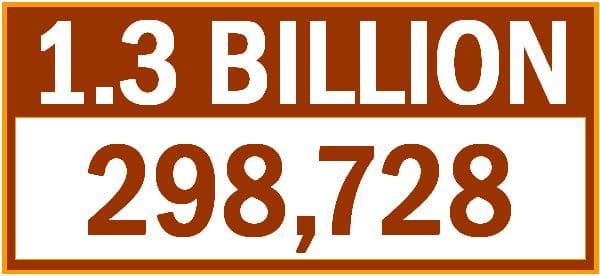
Over $1,300,000,000.00 and 298,728.
Respectively, these numbers represent reported losses and number of complaints the FBI’s Internet Crime Complaint Center received in 2016. Many of these losses resulted from ransomware, tech support fraud, and Business Email Compromise (BEC), with most originating from phishing emails.
BEC scams represent the increasingly sophisticated efforts of internet criminals. A criminal sends a phishing email to allow the scammers into your email accounts and computer system. Once you click on a link or open the infected file, scammers can gain access and lie in wait for days or weeks. During this time they will monitor your activity and gather information to compromise your financials or to obtain enough information to impersonate you and effect fraudulent financial transactions.
To help reduce the chance of becoming a victim of cybercrime, work to prevent the initial intrusion.
Think Before You Click
Whether it looks like an email from a potential customer, your accountant, your bank, or even your mother, always think before you click on any link or attachment. Criminals are becoming more and more sophisticated, the days of unexpectedly receiving an email from a far off land full of misspellings and poor grammar are getting further in the rearview mirror. “Spear phishing,” a phishing attempt specifically tailored to look like it is coming from someone you know or do business with, is becoming increasingly common.
Look closely at the sender’s email address and any links that are included. If you were not expecting a message or something feels “off,” consider reaching out to the sender. If the email is asking you to access your account do not click on the link, instead go directly to the company’s website to access your information.
Increase Your Defenses
When available, use multifactor authentication on your accounts. Nothing can entirely stop efforts of determined cyber criminals, but use the reasonable tools available to make it much more difficult.
Keep your operating system and software up to date with the most recent patches, install and update protective software (antivirus, antimalware, etc), and maintain your firewall. Train your staff to recognize phishing attempts and what to do if they have concerns about an email.
Look at your insurance policies. Do you have cybersecurity insurance? What is your coverage and does your coverage provide access to tools to assist you in building your defenses, including samples of policies and procedures and incident response plans?
Increase Your Awareness
Begin looking at the information you hold and how that information is accessed. Do you have social security numbers, financial account information, health information? Are there ways to reduce the amount or types of sensitive information you hold without compromising your business and your ability to serve customers? Do you allow employees to bring their own devices and are these devices segregated onto a guest system or allowed to enter your company network? The National Institute of Standards and Technology (NIST) provides a number of tools to assist with these self-assessments, including the NIST Framework for Improving Critical Infrastructure Cybersecurity.
You may also find value in having a third party vendor perform network assessments to identify areas of weakness to focus on, from both a technology and human factor standpoint. When an assessment is ordered by legal counsel it may be protected under attorney client privilege and the attorney work product doctrine under certain scenarios, reach out to your legal counsel to discuss.