Monday, November 17th, 2014
Real Estate Law
The Real Estate practice group at Gentry Locke has a well-deserved reputation for successfully helping clients achieve strategic and financial objectives, and completing their real estate transactions on time and on budget.
Our experienced team focuses on creating better, quicker solutions to the challenges present in every land transaction. As a result, we enjoy the continued loyalty of buyers, sellers, developers, investors, landlords, and tenants we have the privilege to serve.
We have earned the respect of local government and elected officials in Roanoke, Botetourt, Salem, Blacksburg, Bristol, Lynchburg, Danville, Charlottesville, Waynesboro, Winchester, Harrisonburg, Staunton, Lexington, and all counties and towns in between. These relationships create opportunities to have meaningful discussions with the key decision-makers involved in the approval process for our clients’ land use projects.
The real estate lawyers at Gentry Locke have been principally involved in the purchase, sale or development of some of the most significant real estate projects in western Virginia, including the:
- Acquisition of multiple parcels comprising the Taubman Museum of Art in downtown Roanoke
- Successful approval of more than 250 wireless telecommunication facilities in over 20 municipalities
- Purchase and redevelopment of the largest private marina at Smith Mountain Lake
- Rezoning or permitting of numerous commercial and planned residential developments
- Closing of historic tax credit financing projects for some of the region’s most important historic structures
Real Estate Litigation
Real estate disputes can slow or shut down a project.
That means lost time, money, and opportunities. Whether through negotiation, litigation, mediation, or arbitration, Gentry Locke’s experienced team of real estate litigators creates quick, responsible, and effective solutions to the challenges present in every real estate dispute.
Our real estate lawyers handle a wide range of real estate disputes, including:
We encourage you to review our Real Estate Practice Group attorneys’ personal pages for additional information and then contact us to discuss your company’s legal needs.
Acquisition & Development
Every parcel of land is unique. However, the purchase, sale and development of any of them is full of risks and challenges. Some of these are identified during due diligence, and some arise later. Having an experienced team of real estate lawyers who have “been there, done that” advising you through the process is invaluable.
Whether drafting the necessary documents, negotiating their terms, or closing the deal, Gentry Locke’s seasoned practitioners are well-versed in each of the following areas:
- Purchase & Sale Transactions
- Land Acquisition & Development
- Zoning & Land Use
- Commercial Leasing
- Condominiums
- Planned Unit Development
- Billboard and Outdoor Advertising acquisition and development
- Section 1031: Like-Kind Exchanges
- Tax Credit Financing
- Coal and Gas Leasing
Comments Off on Real Estate, Land Use, and Zoning
Category | Tags:
Social Networks : Technorati, Stumble it!, Digg, de.licio.us, Yahoo, reddit, Blogmarks, Google, Magnolia.
Monday, November 17th, 2014
The hospitality industry presents specific and unique legal challenges, and as your business grows and changes, so will your legal needs. Gentry Locke’s attorneys advise restaurants, hotels, amusement parks, and fitness facilities on a vast range of issues. We serve clients who operate small businesses and national chains.
Headed by Group Chair Paul Klockenbrink, attorneys within Gentry Locke’s Hospitality industry group regularly counsel hospitality industry clients in multiple areas, including, labor and employment, franchise agreements, supplier and vendor contracts, food and beverage licensing, lease negotiations, risk management, claims management, real estate, land use and zoning, tax matters, and premises liability litigation.
Specifically, we provide legal counsel to businesses in the following matters:
- Employment disputes and litigation including defense of discrimination, harassment and retaliation claims, EEOC charges and administrative proceedings, and the enforcement of non-disclosure and non-compete agreements. We can be there every step of the way, from the litigation stage to the appeals process before agencies and federal and state courts
- Wage and hour claims including issues involving classification, work time, overtime, tipped employees, split jobs, permissible deductions from pay, DOL audits and child labor
- Union avoidance and representing employers in unfair labor practice litigation before the NLRB, collective bargaining, and arbitration
- Consulting and claims management related to guest injury claims
- Defense of premises liability and intentional tort lawsuits
- Workers’ compensation claims
- Employment handbooks, employee contracts, and personnel policies and procedures
- Employee incentives and fringe benefit plans including 401(k) plans, performance bonuses, stock options (ESOPs), matching contributions, elective deferrals and rollovers
- Immigration issues including legal requirements of I-9 Forms, and drafting grant proposals for training non-English-speaking immigrant workers for hospitality industry needs regarding language and occupational skills
- Franchisor/franchisee relationships including preparing, negotiating and reviewing franchise agreements, and assessing and minimizing the risks associated with franchisor control over franchisees’ day-to-day business operations
- Building code, ASTM compliance, sanitation, and environmental counseling and management
- Intellectual Property management including trademark registration and conflicts, trade name registration, copyrighting of logo and menu, and trade secret protection of brands and any proprietary products that may be developed and marketed
- Business organization including forming or restructuring restaurants to shield clients’ potential liability to employees, customers, independent contractors, and other third parties
- Purchase, sale, or transfer of business assets including property, equipment and inventory
- Tax issues including government incentives and tax credits
- Local, state and federal land use and zoning ordinances
- Negotiating, preparing and reviewing agreements between restaurants and vendors
- Insurance matters including equipment breakdown, personal property and medical payment coverage, and accounts receivable
- ABC license and restaurant license applications, counseling on license compliance, and defending alleged license violations
The members of the Hospitality industry group also have access to resources at the national and international levels through our affiliation with ALFA International’s Hospitality Practice Group. We encourage you to review our Hospitality attorneys’ personal pages for additional information and contact us to discuss your company’s legal needs.
Monday, November 17th, 2014
While our tax practice is wide-ranging by any measure, our personalized client service is built on trust.
This healthy balance is what distinguishes Gentry Locke. That, and our ability to find new and unexpected solutions to the daunting tax problems that confront businesses.
The attorneys in Gentry Locke’s Tax practice specialize in helping clients with the most important professional service for tax clients: Planning. We develop plans for every aspect of your business, because nearly every business decision has tax consequences. Experience has taught us that the single best way to avoid problems is to plan for contingencies well in advance.
Let there be no doubt—when controversy does indeed arise, Gentry Locke is more than capable of tackling the issues at hand.
Clients look to us for assistance with estate planning, the transfer of family wealth, building or rehabilitating with state and federal tax credits, allocating tax credits out to investors, executive compensation, employee benefits, and of course, tax audits.
We make the complex seem simple, which is one of the reasons we have long-standing client relationships in tax law.
We encourage you to review our Tax Practice Group attorneys’ personal pages for additional information and then contact us to discuss your legal needs.
Opportunity Zone Investment
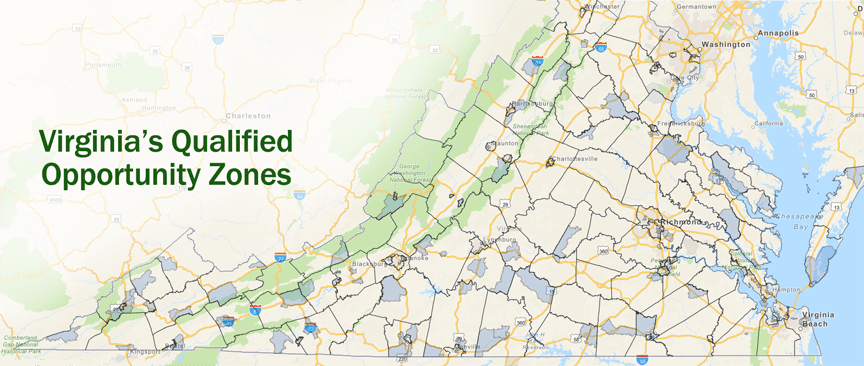
The Tax Cuts and Jobs Act passed by Congress in December of 2017 established the Opportunity Zone incentive program, designed to encourage investment in designated low-income communities. In October 2018, the Treasury Department and the Internal Revenue Service issued proposed regulations which provide guidance and framework for investments in these Qualified Opportunity Zones. Virginia currently has 212 Qualified Opportunity Zones.
Gentry Locke can assist you in evaluating the Opportunity Zone incentive programs, as well as exploring the potential of combining tax credit financing through federal and state historic rehabilitation tax credit programs, and the New Markets Tax Credit Program.
Contact a member of our Opportunity Zone investment team to discuss the incentive program and for assistance in evaluating whether participation in an Opportunity Zone investment may be a good fit for your specific project or investment portfolio.
To find out if an area of your interest is located in of one of Virginia’s hundreds of Qualified Opportunity Zones, click on the map image below and you will be taken to an interactive map.
Tax Planning – Business Entities
Gentry Locke tax lawyers take the lead in tax planning and the structuring of domestic limited partnerships, limited liability partnerships, limited liability companies, and joint ventures, as well as in traditional forms of organization, mergers and acquisitions, reorganizations, and capital expansion programs for corporate clients.
We render advice on and prepare and negotiate complex operational arrangements and agreements:
Tax Planning – Individuals & Families
Planning is key for individuals and families who wish to assert some measure of control over how much of their estate goes to people, and how much to government entities. Inaction can lead to astonishingly negative tax ramifications. Gentry Locke tax attorneys assist clients in maximizing estates to benefit those who our clients feel are most deserving.
Our experience enables us to render advice on and prepare legal instruments for:
- Qualified Conservation Easements
- Establishment of Charitable Trusts
- Gift tax minimization
- Section 1031 Exchanges
- Stock Redemptions
- Shareholder Agreements
- Family Limited Partnerships
- Trusts
- Charitable Contributions
- Capital Gains
- Individual Retirement Accounts
- Defective Grantor Trusts
- Personal Residence Gain Exclusion
- Vacation or Second Homes
- Self-Employment Taxes
- Personal Residence Trusts
- Unified Credit
- Estate Tax Exemption
Audits & Tax Controversies
Handling controversies is a strength of Gentry Locke attorneys. We have represented all types of taxpayers in federal, state, and local administrative tax disputes before the Internal Revenue Service, the Virginia Department of Taxation, and local authorities.
Clients benefit from our experience in the following areas of tax law:
- Federal individual tax audits
- Federal corporate tax audits
- Federal payroll tax audits
- Virginia income tax audits
- Virginia corporate income tax audits
- Virginia sales and use tax audits
- Federal excise tax audits
- Department of Labor audits of employee benefit plans
- Offers in compromise
- Representation in IRS collection activities for unpaid taxes
- Settlements of IRS controversies
- Release of tax liens
Monday, November 17th, 2014
Attorneys at Gentry Locke assist in all aspects of estate planning and estate administration.
We work with clients to create estate plans that are tailored to their individual needs while minimizing taxes and avoiding unnecessary probate proceedings. Our estate planning lawyers regularly work with business owners to design succession plans to accomplish their specific goals.
We advise clients on complex estate planning matters, offering creative, effective, and sophisticated solutions.
We also guide executors, trustees, and other fiduciaries through the challenges and nuances of an estate or trust administration.
Trust & Estate Litigation
In addition to our array of trust and estate planning services, Gentry Locke handles all types of litigation concerning wills, trusts, estates, and end-of-life issues, including:
- Prosecution and defense of will contests
- Prosecution and defense of claims against trustees, executors, administrators, and personal representatives
- Appointment, removal, and replacement of fiduciaries, including executors, personal representatives, guardians, conservators, and attorneys‑in‑fact
- Prosecution and defense of creditors’ and heirs’ claims against estates
- Prosecution and defense of claims of undue influence and lack of mental capacity
- Collection, marshalling, accounting, and distribution of estate assets
- Modification or termination of trusts
- Litigation concerning powers of attorney, living wills, and medical directives
- Litigation concerning life insurance, “payable on death” accounts, and transfers of decedents’ real estate, stock, bank accounts, and personal property
- Litigation arising from elder care abuse and fraud
We encourage you to review our Trusts and Estates Practice Group attorneys’ personal pages for additional information and then contact us to discuss your legal needs.
Probate
Probate refers to the court-supervised process of handling a deceased person’s financial affairs. Personal representatives who are responsible for administering a loved one’s estate face many significant decisions and issues throughout the process, which may include:
- When to pay creditors
- When and how to make distributions from the estate
- Whether to file and how to prepare inventories and accountings
Gentry Locke attorneys guide personal representatives throughout this process and ensure that their interests are protected. We also advise beneficiaries regarding their rights during the probate process.
Guardians & Conservators
Sometimes a person becomes legally incapacitated, and cannot independently make decisions about finances, medical care, or other important life activities. It may be due to injury or diseases associated with aging, or it may be a genetic or other condition that affects a developing child. In such situations, the appointment of a guardian or conservator may be necessary. If you believe a family member or loved one needs this kind of assistance, Gentry Locke attorneys can petition the court to appoint you or another trusted person as a guardian or conservator.
It should be noted that poor judgment is not incapacity. A person is legally incapacitated if a court determines the person to be “incapable of receiving and evaluating information effectively or responding to people, events, or environments to such an extent that the individual lacks the capacity to:
- Meet the essential requirements for his health, care, safety, or therapeutic needs without the assistance or protection of a guardian, or
- Manage property or financial affairs or provide for his support or for the support of his legal dependents without the assistance or protection of a conservator.” (Va. Code Ann. § 64.2-2000)
A guardian (dealing with health and safety) or a conservator (dealing with finances or property) can be granted broad powers or may have limited power to decide specific issues. Each situation is unique. The scope of the guardian’s or conservator’s power is set by Virginia law and the court order specific to the individual. Guardians and conservators have a fiduciary responsibility to the incapacitated person, meaning they must act with the utmost loyalty and care—their actions must be above reproach. The actions of a conservator are monitored by the local Commissioner of Accounts, through periodic filings of accounting documents.
If the person is not found to be legally incompetent, alternatives are available to provide assistance. General or durable powers of attorney, advance medical directives, trusts and other documents can be used to appoint people to help with specific tasks or issues.
Consult with the attorneys who are listed on this page to learn what options may best serve your situation.
Monday, November 17th, 2014
Gentry Locke is experienced in representing clients in whistleblower and “qui tam” litigation in a variety of contexts, drawing upon our experience in complex litigation, criminal investigations, and employment law.
This is a complex area of law. We are immensely resourceful when defending companies against these charges and the claims of retaliation that often result. In some instances, we will represent an employee or third party who has evidence of government fraud or other illegal conduct (qui tam relators).
False Claims Act Litigation
The primary focus of Gentry Locke’s Whistleblower and Qui Tam practice is the False Claims Act, or “FCA.” The FCA is the strongest weapon in the federal arsenal for recovering government funds paid based upon false claims, and represents one of the greatest legal threats to businesses today. One of the hallmarks of the FCA is its qui tam provision, which allows a private citizen whistleblower, or “relator,” to bring suit on behalf of the government. By statute, a qui tam relator may receive 10% to 30% of the government recovery.
The United States Government recovered over $38.9 billion through the FCA from 1987 to 2013, with over 70%, or $27.2 billion, coming from cases with a qui tam relator. The federal government is taking an increasingly aggressive stance in FCA litigation every year, with the number of cases and recoveries growing rapidly. In 2014 alone, the Department of Justice announced settlements and judgments totaling almost $3 billion.
Sarbanes-Oxley and Dodd-Frank Whistleblower Statutes
In the age of Enron, Bernie Madoff, and the Wall Street scandals, it comes as no surprise that the U.S. Government has sought new ways to uncover fraud. Due to the success of the FCA qui tam provision, Congress placed similar qui tam provisions in other whistleblower statutes, including Sarbanes-Oxley and Dodd-Frank.
If you are a business or an individual facing government investigation, Gentry Locke’s White Collar Defense, Investigations, and Compliance group represents businesses and individuals in all aspects of internal investigations and government enforcement actions. Gentry Locke’s Employment & Labor group advises businesses in all aspects of whistleblower retaliation issues and represents employers of all sizes in whistleblower retaliation litigation.
For businesses hoping to avoid issues with the FCA and other federal statutes, Gentry Locke’s Government Contracting team can assist in avoiding pitfalls in government contracting and programs.
Qui Tam Relators & Whistleblowers
If you are a potential whistleblower, Gentry Locke’s Qui Tam Relator Practice represents whistleblowers who may have standing as qui tam relators. We have experience with claims arising out of the health care industry, defense and government contracts, and federal grant funding. In these cases, we work hand-in-hand with federal prosecutors and agencies to maximize both the recovery of taxpayer funds to the government and the whistleblower’s reward.
We encourage you to review our Whistleblower Claims and Qui Tam Practice Group attorneys’ personal pages for additional information and then contact us to discuss your legal needs.
Click here
Qui Tam Relator Whistleblower Actions
Gentry Locke’s Qui Tam Relator Practice represents whistleblowers who may have standing as qui tam relators.
Gentry Locke attorneys have experience with claims arising out of the health care industry, defense and government contracts, and federal grant funding. Our team works hand-in-hand with federal prosecutors and agencies in these cases to maximize both the recovery of taxpayer funds to the government and the whistleblower’s reward.
False Claims Act Litigation
The primary focus of Gentry Locke’s whistleblower and qui tam practice is the False Claims Act, or “FCA.” The FCA is the strongest weapon in the federal arsenal for recovering government funds paid based upon false claims. One of the hallmarks of the FCA is its qui tam provision, which allows a private citizen whistleblower, or “relator,” to bring suit on behalf of the government. By statute, a qui tam relator may receive 10% to 30% of the government recovery.
The United States Government recovered over $38.9 billion through the FCA from 1987 to 2013, with over 70%, or $27.2 billion, coming from cases with a qui tam relator. The federal government is taking an increasingly aggressive stance in FCA litigation every year, with the number of cases and recoveries growing rapidly. In 2014 alone, the Department of Justice announced settlements and judgments totaling almost $3 billion.
Sarbanes-Oxley and Dodd-Frank Whistleblower Statutes
In the age of Enron, Bernie Madoff, and the Wall Street scandals, it comes as no surprise that the U.S. Government has sought new ways to uncover fraud. Due to the success of the FCA qui tam provision, Congress placed similar qui tam provisions in other whistleblower statutes, including Sarbanes-Oxley and Dodd-Frank.
We encourage you to review our attorneys’ personal pages for additional information and then contact us to discuss your legal needs.
Monday, November 17th, 2014
Professionals in a variety of business sectors, including insurance, healthcare, government contracting, natural resources, finance, and higher education, routinely turn to our Chambers-ranked white collar criminal defense and government investigations practice group for guidance, particularly when charged with or suspected of violating criminal, regulatory, or tax laws.
Who We Are
Tom Bondurant has tried several hundred criminal jury and bench trials and conducted thousands of investigations. With a former Chief of the Criminal Division of the Western District of Virginia U.S. Attorney’s Office, and former state and federal prosecutors on our team, we are uniquely positioned to address any concerns our clients face.
Our practice group is ranked Band One by Chambers USA for Litigation: White Collar Crime & Government Investigations in Virginia, and individual attorneys in our group have been highly ranked and honored by Chambers USA, Virginia Business magazine’s Legal Elite, and Best Attorneys in America for criminal defense. In the past ten years we have handled numerous high-profile and landmark matters, such as facilitating the largest settlement of an opioid-related federal prosecution in U.S. history.
What We Do
Our white collar attorneys work closely with our clients on investigations and compliance to provide them with the best protection against future enforcement actions. When our clients face a government inquiry, we’re there at all stages of representation to ensure no avenue of action is left unexplored. The best victory involves persuading the government not to file charges against our clients, because litigation is increasingly expensive. We are experienced in negotiating favorable settlements or assisting clients in deciding whether to accept a plea bargain. But when litigation is warranted, we also have the trial experience, resources, and dedication to mount a vigorous defense on nearly any subject matter.
We primarily represent corporate clients in investigations, regulatory enforcement actions, and criminal prosecutions initiated and conducted by federal and state law enforcement agencies and governmental entities, including:
- State and federal grand juries
- U.S. Attorney’s Offices (USAO), including in the Western and Eastern Districts of Virginia
- Department of Justice (DOJ), including its Environmental Crimes Section, Health Care Fraud Unit, Tax Division Criminal Enforcement Section, and Public Integrity Section (PIN)
- U.S. Department of Health and Human Services Office of the Inspector General (HHS OIG)
- Financial Crimes Enforcement Network (FinCEN)
- State Attorneys General (AG)
- State regulatory enforcement taskforces, such as the Virginia Attorney General’s Medicaid Fraud Control Unit (MFCU)
- Congress
These investigations and actions involve a broad range of statutes, regulations, and issues, including:
- Food, Drug, & Cosmetics Act (FDCA), and pharmaceutical marketing and advertising regulations
- Healthcare fraud, including Medicaid and Medicare fraud, misbilling, and overbilling
- Bribery, violations of the Anti-Kickback Statute (AKS), and public corruption
- Securities enforcement
- Government contracting
- The Racketeering Influences and Corrupt Organizations Act (RICO)
- Tax evasion and Internal Revenue Code (IRC) violations
- Espionage Act and national security
- Arms Export Control Act (AECA)
- Foreign Corrupt Practices Act (FCPA)
- Pharmacy regulations, including the Combat Methamphetamine Epidemic Act (CMEA)
- Environmental, natural resources, and animal welfare statutes and regulations, including the Endangered Species Act (ESA) and Lacey Act
- Qui tam actions under the False Claims Act (FCA) and Virginia Fraud Against Taxpayers Act (VFATA)
- Consumer protection acts, including the Virginia Consumer Protection Act (VCPA)
- Patient Protection and Affordable Care Act (ACA)
- Financial crimes, including fraud, embezzlement, and money laundering
- Covid-19 and pandemic response
- Antitrust
- Federal program fraud
We also conduct internal investigations for corporate clients facing allegations of employee misconduct or violations of state and federal laws and regulations. This includes assisting clients in complying with parallel government investigations, preparing for audits, identifying misconduct prior to prosecution or civil enforcement, designing and helping implement corrective actions to minimize legal risk and exposure, and self-reporting. Our white collar attorneys recognize the highly-sensitive nature of internal investigations and have the experience necessary to help our clients navigate the complications inherent in those investigations.
We encourage you to review the personal pages of the attorneys in our White Collar Defense, Investigations & Compliance Group for additional information and then contact us to discuss your legal needs.

Monday, November 17th, 2014
Experience
We are a full-service appellate team practicing in Virginia’s state and federal trial and appellate courts. Having handled more than 200 appeals, our team is known for its deep experience in Virginia’s appellate courts and its knowledge of appellate procedure in these courts. Two members of our team have clerked for Virginia appellate court judges: Monica Monday clerked for a former Chief Judge of the Court of Appeals of Virginia and Dave Berry clerked for a former Chief Justice of the Supreme Court of Virginia.
We routinely appear in the Court of Appeals of Virginia, the Supreme Court of Virginia, and the United States Court of Appeals for the Fourth Circuit. And, when necessary, we have experience seeking and resisting certiorari in the United States Supreme Court. We’re familiar with the rules and procedures of these courts, as well as the judicial philosophies of their members.
Having practiced in Virginia’s appellate courts for decades, we are also known for the breadth of our appellate experience. We have successfully handled all kinds of civil appeals, including business and corporate, local government, insurance, banking, contracts, bankruptcy, construction, intellectual property, whistle-blower, personal injury, property, asbestos, trusts and estates, mineral rights, divorce and family law, workers’ compensation, and employment and employment discrimination. In the criminal context, our focus is on complex federal court matters.
Our team often gets involved even before there is an appeal. At the trial stage, we assist trial counsel with framing the critical legal issues for appeal and ensuring that those issues have been preserved for appellate review. We enjoy working side-by-side with trial counsel to draft and argue motions and jury instructions, make objections and proffers, and ensure a complete record for appeal.
Our appeals law firm’s size and resources allow us to handle bet-the-company litigation. Still, our reasonable approach lets us effectively handle smaller cases. Regardless of the size of the case, our focus is to partner with our clients and trial counsel to achieve the best result.
Results
Over the years, our team has earned an outstanding reputation for effective appellate representation. Some of our representative appeals include the following:
- Secured reversal of $2 billion verdict, the largest in Virginia history, in trade secret misappropriation case. Pegasystems Inc. v. Appian Corporation, 81 Va. App. 433, 904 S.E.2d 247 (2024)
- Secured final judgment for bank in equitable subrogation case concerning entitlement to funds in deposit account. Arch Insurance Company v. FVCbank, 301 Va. 503, 881 S.E.2d 785 (2022)
- Obtained affirmance of district court’s “arm of the state” ruling in False Claims Act case. United States ex rel. Arven v. NICA (No. 20-13448) (11th Cir. 2022)
- Court reversed federal program fraud conviction and affirmed other counts. Spirito v. United States, 36 F.4th 191 (4th Cir. 2022), cert. denied, 143 S. Ct. 567 (2023)
- Obtained affirmance of favorable summary judgment ruling in discriminatory taxation case brought under the Railroad Revitalization and Regulatory Reform Act. Norfolk Southern Ry. Co. v. City of Roanoke, 916 F.3d 315 (4th Cir. 2019)
- Court affirmed the trial court’s decision to set aside a multi-million dollar verdict in a government contracting case. CGI Federal, Inc. v. FCi Federal, Inc., 295 Va. 506, 814 S.E.2d 183 (2018)
- Secured affirmance of favorable breach of contract judgment. Knox Energy, LLC v. Gasco Drilling, Inc., 637 Fed. Appx 735 (4th Cir. 2016)
- In question of first impression involving social host duty to child guest, obtained affirmance of motion to strike. Lasley v. Hylton, 288 Va. 419, 764 S.E.2d 88 (2014)
- Court reversed dismissal of defamation case and clarified the defenses to qualified immunity. Cashion v. Smith, 286 Va. 327, 749 S.E.2d 526 (2013)
- Obtained reversal of $25 million jury verdict in maritime case relating to asbestos exposure. Exxon Mobil Corp. v. Minton, 285 Va. 115, 737 S.E.2d 16 (2013)
- In question of first impression, obtained dismissal of domestic relations appeal based upon terms of property settlement agreement, which waived the right of appeal. Burke v. Burke, 52 Va. App. 183, 662 S.E.2d 622 (2008)
- Obtained reversal of adverse judgment in case involving the storage of wastewater from mining operations. Levisa Coal Co. v. Consolidation Coal Co., 276 Va. 44, 662 S.E.2d 44 (2008)
- Secured affirmance of compensatory and punitive damages awards for breach of fiduciary duty, tortious interference, and conspiracy. Banks v. Mario Industries of Virginia, Inc., 274 Va. 438, 650 S.E.2d 687 (2007)
- Obtained reversal of dismissal in a premises liability case involving a question of first impression. Taboada v. Daly Seven, Inc., 271 Va. 313, 626 S.E.2d 428 (2006), adhered to on rehearing, 641 S.E.2d 68 (2007)
- Successful defense of jury verdict in a construction case interpreting statutory warranty for new dwellings. Vaughn, Inc. v. Beck, 262 Va. 673, 554 S.E.2d 88 (2001)
- Landmark case clarifying Virginia’s business judgment rule. Willard v. Moneta Building Supply, Inc., 258 Va. 140, 515 S.E.2d 277 (1999)
What Do We Do?
We handle all aspects of the pre-appeal and appellate process, including:
- Assisting at trial with critical motions, jury instructions, and preserving issues for appeal
- Handling post-trial motions
- Reviewing and analyzing the record for appellate issues and error
- Obtaining appeal and suspending bonds
- Noting and perfecting the appeal
- Briefing the appeal
- Arguing the appeal
- Handling petitions for rehearing
- Pursuing appellate costs and attorneys’ fees
What is Appellate Law?
Appellate law is defined as the legal process of appealing a court decision to a higher court for review. In civil and criminal cases, the appellate court’s role is to assess whether the lower court’s decision was legally correct and fair. Appellate attorneys like Gentry Locke specialize in handling these appeals and presenting persuasive arguments to the higher court. Unlike trial proceedings, appellate cases focus on legal issues, precedent, and application of the law rather than reexamining the facts. The appellate process ensures that legal errors are corrected and that justice is served. Effective appellate representation demands a deep understanding of the law, extensive research, and compelling written and oral advocacy. Please let us know how we may assist you with your appeal.